Showing posts with label Photography. Show all posts

Tuesday, June 5, 2012

Discovering an Oasis Not So Far From Jakarta, at Thousand Islands, Indonesia

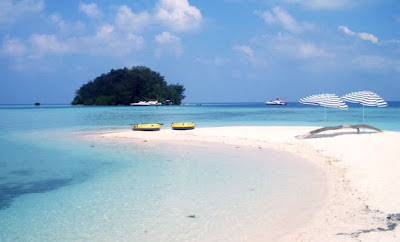
Tiger Island (Pulau Macan)
The paradox of writing about hidden gems is that by drawing attention to the gem, you take away its hiddenness. But I can describe Pulau Macan, also known as Tiger Island, with a clear conscience, confident that the values and vision of the resort can withstand anything a little publicity may bring. Those values — environmentalism, mindfulness and cooperative living — will stay intact despite the increased attention from tourists.

Today, it takes some digging to discover Pulau Macan, one of the 110 terrestrial oases that make up the Pulau Seribu (Thousand Islands) north of Jakarta — but that could change in the future. I found Pulau Macan by happenstance, seeking an alternative when a visit the Gili Islands turned out to be too expensive for a weekend trip. But what began as a budget-conscious consolation prize proved to be a first-rate vacation all its own.

A Good Start

Tiger Island (Pulau Macan)
The Pulau Macan experience began before we even left Jakarta. Gathered in the morning heat at Ancol Marina, we were greeted by a waiting speedboat and a smiling host who issued Dramamine to the seasick-prone. Eighty-three kilometers separate Pulau Macan from Jakarta, a distance that takes anywhere from 90 minutes to four hours to navigate, depending on ocean conditions and the boat.

Our trip out was speedy and smooth, though the return, on a much smaller boat, was quite bumpy.

Rough seas notwithstanding, the boat trip can be just as enjoyable as island time, the trash-strewn waters of Jakarta turning to infinite ocean, which suddenly lightens from indigo to azure as emerald islands appear on the horizon.

Tiger Island (Pulau Macan)
Once we docked at Pulau Macan, it didn’t take long before the island started to feel like home. A quick tour gave the lay of the land: a central clubhouse plus eight cabins. Each stand-alone structure had a private bathroom, except the red brick and “eco” cabins, which accommodate two parties apiece. Every choice has its unique charms and quirks, so those heading out should describe their needs, whether it be romance, something family-friendly or protection from mosquitoes.

Sleeping accommodations are comfortable across the board, though I’d advise turning in on the early side, since the mornings bring dazzling sunlight along with rooster crows, songbird trills and the noisy activities of early-rising guests.

Dive Right In

With a tropical playground to explore, I made sure to be well-rested. The primary island pursuit is snorkeling. Pulau Macan supplies masks, flippers and water booties, so there was no excuse not to give it a try. With masks strapped on, we waded out into the sun-warmed water (Beware the small beige fish near shore — they bite! Painless but a bit startling), and let ourselves tune out everything above sea level.

Under water at Tiger Island (Pulau Macan)
Underwater, white sand peaks stretched out everywhere before the monochrome landscape ended, replaced by blossoms of coral and explosions of sea urchins, swarming with fish and other creatures, some colorful and some camouflaged, indistinguishable from their backdrop. It was thrilling to see a lump of sand suddenly become a living creature.

Staying close to the island provides a wonderful snorkeling experience. But, feeling more adventurous, we decided to swim out until the crystal shallows dropped off into dark blue depths. These ridges, with massive islands of coral marking the underwater cliff, provided an endless supply of sea life to witness.

Following the curve of the ridge away from the island, we soon reached The Deserted Island, an undeveloped sanctuary owned by the resort, which offered solitude, quiet and exquisitely exhaust-free air.

Under water at Tiger Island (Pulau Macan)
Wanderlust unsatisfied, we each hopped on a paddleboard, or piled into the charmingly dilapidated wooden rowboat, and headed out into the open sea for some island-hopping.

Back on the Island

We found land activities to be available, but limited. The clubhouse provides board games and a billiard table (there is only one stick, so be ready to share), plus there was a beach volleyball net and an on-site masseuse.

The masseuse, perched by his spa hut at all hours awaiting customers, is perhaps the least discovered aspect of a largely undiscovered island. For only Rp 150,000 ($16) for an hourlong massage in an idyllic stilted hut overlooking sparkling ocean, I couldn’t fathom that only two guests, myself included, signed up for the service. Of course, that could have been related to our host’s description of the masseuse during the tour: “He’s rather blind, rather deaf and tends to be quite rough.” I did find the massage a bit on the forceful side, but that was an invigorating juxtaposition to the storybook tranquility of the setting. And if I wanted less intensity, I only had to touch his hand and he lightened up.

With all that relaxing, I worked up an appetite, easily sated by Pulau Macan’s all-you-can-eat dining program. Expect seasonal fruit at breakfast, and a wide selection, including vegetarian-friendly options, at lunch and dinner, plus platters of hors d’oeuvres that materialize on the sundeck each evening near twilight.

Tiger Island (Pulau Macan)
Adult beverages cost extra, but the prices beat most Jakarta bars — Rp 30,000 for a beer, Rp 60,000 for a cocktail — and you also have the option to bring your own alcohol for a nominal corkage fee. Though the bar closes at midnight, you can sit out on the deck sipping drinks with new friends as long as you’d like, just keep track of your tab (the honor system is taken seriously here).

Perhaps the best part of meals at Pulau Macan was their communal aspect. You can request to eat apart from the group, but I recommend taking full advantage of this excuse for companionship. It’s an invaluable opportunity to meet people you might never have encountered otherwise, people from wide-ranging cultural, geographic and educational backgrounds, people with rich stories and open minds. At minimum, these communal meals allow you to witness the myriad paths a human life can take, and at best, you might meet someone whose friendship weathers the bumpy trip back to Java and becomes a mainland ally.

Back to Basics

Pulau Macan is not a luxury resort, but it doesn’t pretend to be. In fact, it’s the quirks — the hole-ridden water shoes, the tied-together snorkeling masks, the uneven rowboat oars — that create its comfort. Pretense yields to authenticity, conveniences give way to community, and you find yourself luxuriating in the modesty of an unheated shower, grateful that your BlackBerry’s reception is too spotty to be useful. There is a simplicity that most of us long ago drowned out with the noise of modern life.

Tiger Island (Pulau Macan)
It’s because of this pared-down approach that the trappings of the resort recede and the larger ideas — the ones so big they easily blend into the background — return. Sitting on the dock after dinner, looking out into the black ocean and blacker sky, we let our eyes pick out more and more stars. The stars, the marine life and the unfamiliar sense of peace allowed us to just be for a moment: These are the fruits of patience, a patience that’s nearly extinct in bustling cities, but a patience that can not only be restored, but can be found thriving in places like Pulau Macan.

Kate Willsky for Jakarta Globe

Friday, May 4, 2012

If You Want To See Komodo Dragons, Visit Their Original Habitat in NTT

Komodo Habitat
The East Nusa Tenggara (NTT) administration has refused the central government’s recent plan to exchange its famous komodo dragons with China for endangered pandas, an official says.

NTT provincial secretary Frans Salem said on Thursday that the administration had pledged not to move the komodo dragons from their original habitat at Komodo National Park in West Manggarai on Flores to China, and was sure local residents would reject such plans. “The NTT administration and local residents will never grant such a request,” he said.

“The komodo is the province’s most precious asset. If you want to see komodo dragons, visit their original habitat,” Salem said.

Komodo National Park Indonesia
Northern Komodo Island Indonesia
Komodo Island
Komodo Dragon
Komodo Dragon
Komodo Dragon
Komodo Dragon
Komodo Dragon
During a visit to Beijing in April, President Susilo Bambang Yudhoyono and Chinese President Hu Jintao agreed to swap their iconic animals as a symbolic gesture marking the improved bilateral relationship between both countries.

The plan was later followed up in a meeting held between Vice President Boediono and China’s Vice Premier Hui Liangyu.

Salem said that the province would host the 2013 Sail Komodo with participants from more than 100 countries. “That is why moving komodo dragons from their natural habitat is not a good idea,” he said. (swd)

Thursday, April 19, 2012

Music Bambu - Minahasan Bamboo Music Orkestra

Bamboo music, in Madidir in a party-Bitung Aertembaga December 6, 1948

All week long, the fishing hamlet some 20 kilometers offshore from the North Sulawesi capital of Manado presents a vignette of island tranquility: pastel pink church steeple, a wave-lapped beach and white-washed cottages.

But on Thursday nights, the calm in Bunaken is shattered by the raucous practice sessions of the town’s 32-piece “bamboo orchestra” — six rows of men wrapped in contorted yards of bamboo and brass tubing from which they pump out volumes of “oompah” music.

There are two rows of flutes including 83-year-old Simon Lungala giving his large bamboo flute his all. Behind him are nine mouth “coronets”, a few trumpets, a drum and cymbal set, and a generously twisted gigantic bass tuba.


Conductor Zakarias Likawa leads the ensemble, waving his own instrument, which he calls a “bass clarinet”. The three-holed, conical brass contraption looks about as much like a clarinet as Zakarias (in his loud, blue batik shirt and knee-side Aqua bottle of Cap Tikus — 17 percent proof local alcohol) looks like a conventional conductor.

But close your eyes for a minute and you can almost imagine Zakarias in full tuxedo wailing away on the elegant, floor-length woodwind that is his instrument’s namesake.


At play: Faldini Salimu, 14, joins his father and other members of Bunaken’s Orkes in a weekly rehearsal.At play: Faldini Salimu, 14, joins his father and other members of Bunaken’s Orkes in a weekly rehearsal.The sonorous, thick sound of his music bespeaks a smattering of classical training, a lifetime of jazz listening and a purist connoisseurship. “We have no electric instruments in the bamboo orchestra,” Zakarias explains, “only our breath. It’s kind of like we are singing.”

Although Zakarias insists that the music is a unique and spontaneous creation of Bunaken alone, there are, in fact, numerous bamboo orchestras that go back a long way and are widely scattered throughout the Minahasa territory of Northern Sulawesi. Many of them, including the Bunaken band, source their instruments from the same two craftsmen near the legendary Minahasan heartland of Tondano.

In Tara-Tara, about 60 kilometers uphill from Manado, another bamboo orchestra claims to be playing in the music’s birthplace. According to orchestra leader Pietro Menteng, a retired elementary school teacher, the music was first brought to Northern Sulawesi in the early 1900s by a Dutch Catholic missionary, perhaps homesick for Western music.

The priest worked with local villagers to construct instruments for a full western orchestra, complete with saxophones, clarinets and an “organ”. All the instruments were built from locally sourced bamboo.


Over the past century, though, the hollow bamboo sounds of Orkes Bambu have migrated away from Western church music into a folk music specific and unique to the Minahasan lands, Pietro says. “We interpreted it to our current situation here. This is music of a mixed culture.”

Another shift local orchestras have encountered recently is the comparatively tepid reception their music receives, at least in the Minahasan lands of Tomohon and Tondano.

Pietro blames this on outmigration of Minahasans in search of higher paying jobs. “Before, our ancestors worked on the farm, planting enough [to pay] for food and clothing, but now people are always looking for more money and need to leave the village.”

Ask around the marketplace in neighboring Tomohon and answers differ. The tone just doesn’t seem to jibe anymore according to Yulius Pagamanden, a 50-year-old ojek driver. He says he listens to Orkes Bambu because it is a regional art with a strong local presence. Asked if he likes the sound though and he smiles and says, “yeah … a little bit.”

In a blue mikrolet nearby, Jeffrey Wetick is blasting tunes from Indonesian Christian crooner Rohani. He says he still plays music from Manado’s Orkes Bambu in his mikrolet from time to time but he listens to Rohani’s “Ave Maria” more often.

If Orkes Bambu music is in decline, though, you’d never know it back in Bunaken, where Zakarias insists the music is appreciated by locals young and old. A look around the Thursday evening practice is evidence.


The band is made of three boat builders, three retirees, two schoolteachers and a whole lot of fishermen. Brass flutes, cymbals and drums drown out the only remaining bamboo element of the band: the “coronet” (a mouth organ comprising bamboo tubes of different heights cradled in a larger bamboo stump). Those that play the instrument such as 14-year-old Faldini Salimu, the youngest member of the ensemble, are vocal advocates of the older instrument form.

Faldini plays his “coronet” in the row right behind the oldest member. Neighbors crowd around under umbrellas. Kids tip their heads back to take in the whole 32-man band at one sweep. Wives sit on the wraparound parapet, whispering to each other and tapping their high-heeled feet to keep in time with the songs.

It’s the regularity of the rehearsals that keeps the music alive and the village intact, Zakarias maintains. “Villagers need to gather, get instruments and practice. If this doesn’t happen, they disperse.”

Wednesday, April 18, 2012

Mbah Daliyo - Javanese Gamelan Master Craftsman


As an instrument maker, Daliyo never afraid to be poor or compete with its rivals. For him, the fate of just resting on the will power. He just proved with perseverance, prayer and hard work. Because that's optimism, he was able to survive in a profession that had he lived more than half a century.

Starting from the wreck (salvage) of copper, brass, tin as well, which left the Netherlands in a sugar factory in dismantling in Beran, Sleman, this figure began the journey of his life. From childhood he was so sure that what's on his childish mind could menafkahinya later time. And it proved. Up to now, have trod 50 years he stayed with his profession. Number of half a century following ups and downs, he said, he lived with a sincere and candid. He was so confident, that perseverance, hard work and prayer, will bring gifts.

Daliyo Hadi Prayitno, the name of this figure. Turned 75 years old. He don't want to call a Masters (Empu - Indonesia gamelan and keris master), because he just plain instrument maker. "I am not a master. I'm just a businessman or Javanese gamelan maker, "he explained modestly. About his interest in this profession, he was blunt, "I was Mogol (pout) and quit school since 6th grade, because parents could not afford. Then I decided to make a gamelan, "he explained briefly about the particulars of his career. 
Really lucky, the trail was originally facilitated by the capitals heritage in the dismantling of existing sugar factory, now it was a district office Sleman. "The equipment, brass, wesi (iron), a tool o'clock, everyone was there. I live to wear it, "he said. If not for the legacy that will never be Daliyo instrument maker. He is well-versed because he ussualy work it, although the knowledge he gained only a self-taught, from the experience of experimenting. "I believe the gamelan can sustain life," he said with optimism.

Getok Tular or Word of Mouth
His seriousness he proved it by making the home, for shelter as well as be a place of business makes gamelan (besalen). In 1959 he decided to move, from Sleman to Bantul. A house, which he called "the house concerned" in the pelem Lor, Baturetno, Banguntapan, Bantul, Yogyakarta, in the end to witness his struggle with gamelan-making business until now. In front of house area of ​​almost a thousand meters was plastered billboards: "Companies Gamelan Daliyo." In the backyard looks a jeep and a truck that is used for job mobility.


Since his move, the order has come and go. The capital is only the trust that has been established from mouth to mouth customers (getok tular or word of mouth). Daliyo have a guarantee, that he could work on time, so that its customers happy. It is not easy to defend the profession and 50 years. "Spare no pains" that's the key to consistency Daliyo, the grandfather of 12 grandchildren. In his old age, the overlay thick glasses, he is still taking care of financial management company, which overshadow the 10 employees, which is comprised of handyman lamus (Handyman who helped blow the wind in order to obtain a temperature hot enough), carpenters alap , carpenters hammer, handyman scrape, and handyman sheen. In addition, the second son, Legiyan, also helping this effort.


When Gong visited her home in the sweltering afternoon, Daliyo were busy controlling the manufacture of 13 sets of gamelan that will be sent to Alor. Each set consists of 2 kempul, 3 bendhe, and 3 bonang. "This order is for ceremonial purposes in there," he explains. Several sets of gamelan are also apparently still ngonggrok (stored) in his house waiting behavior. He does not promote everywhere, except only with a simple business cards and getok tular or word of mouth was. In addition to the domestic order of the various islands in Indonesia, he also has served a variety of orders from abroad, like America, Australia, Malaysia, Japan, and others. When asked to name one by one, Daliyo've forgotten the name of the agency or individual details of ordering it.
  
Nrimo Ing Pandum (willingly accept what has been given)
Daliyo make three types of gamelan, with material iron, brass, and bronze. A complete set of brass gamelan price could reach about IDR 85 million. While the bronze gamelan, the price could reach at least IDR 160 million. "Because the process is more difficult and longer, until a year," he reasoned. Daliyo, who had been chairman of RT (Neighborhood) for nearly 20 years, not just rely on a complete gamelan set to be sold, but rather rely genjelan (instruments that are ordered separately).


Typically performed Daliyo gamelan making process in general. Starting from the wholesale of raw materials in the form of plate brass, copper, and tin; then njangka process (drawing) according to what will be created, burning, forging, pengerokan, nglaras (tuning), until penggilapan. To rancakannya, Daliyo use jackfruit tree materials, also teak wood.


This process could not be done separately. That is, make a gamelan is teamwork that takes patience, perseverance, and courage not to be allergic to fire and noise due to the deafening sound forging. The specialty of homemade gamelan Daliyo, said its customers, is because wutuhan (makes no connection) brass. For example, making Ageng Gong, which reached 1 meter in diameter size, he makes no connection. This makes the gong is not prone to rupture.


Daliyo not only makes gamelan pelog slendro only. He is flexible, and serves all kinds of gamelan tones. Once upon a time he made a gamelan set to campur sari (Kind of Music in Mid Java), which is tuned diatonic. "In this diatonic gamelan tuning process I use the keyboard," he said. That does not mean Daliyo does not have idealism as an instrument maker (Java). Is behind the gaze of the father of 4 children is just perseverance and tireless efforts to survive only. Daliyo not the one who ambition in response to Javanese culture and its philosophy. The principle of his life: nrimo ing pandum (willingly accept what has been given). If the trust came to him, he did according to what he could do, with all the blessings of God, his lord.

Of persistence, the spouse Mrs. Surip (late) that a waranggana (Singger named in mid Java - sing to the accompaniment of gamelan), received an award from the Regent of Bantul, Idham Samawi, for his participation to develop and preserve arts and culture through the effort of making gamelan. Award he received in 2005. According to his testimony, the award was earned because that is where one full swing (point of manufacture gamelan) the most "basic" (main).


Daliyo claim not as a merchant, just only thought of material gain. He made the gamelan without the need to pursue a business turnover and wearing a surefire strategy. "Fortune will come if we lean on God's destiny with hard work and prayer," he said memedar noble message. 

Daliyo also always run behavior is concerned, and always begged the Almighty, to be smooth in his quest through life. If he gets a fairly great fortune (large), once a year he organized the celebration, njereng kelir (show puppet), inviting neighbors and colleagues. According to him, he had a fortune that should be enjoyed also by others. 


Daliyo also have a principle, that all the fortune and things just belong gadoan (deposit) of God. "Soon all will come back to him," he said.


Wednesday, March 21, 2012

Sunda Kelapa, The Most Historical Port at Jakarta

Monita, Devi, Zidane and Rama at Sunda Kelapa
Sunda Kelapa is the city’s most historical port, renowned for phinisi schooners, the traditional vessels of the Bugis people of Sulawesi, still used to deliver goods around the archipelago. The phinisi ships at Sunda Kelapa are wooden vessels around 40 meters long and 15 meters wide, with two main masts with seven sails each. The boats have diesel engines they can use alternately with the sails. They can carry up to 950 tons of cargo, which varies from cement and timber, to electronic devices and appliances.

Sunda Kelapa
The schooners transport goods across the archipelago, but mainly to Batam island or Pontianak in Kalimantan. The journey takes up to three full days. Some may return laden with timber from Kalimantan but most return empty to Sunda Kelapa to reload.

Sunda Kelapa’s history dates back to the 12th century, when it was the most important harbor of the Pajajaran Kingdom (the area now known as West Java), with trading ships from China, southern India, Japan and the Middle East. In the 15th century it became the source of a conflict. The port was conquered by Fatahillah on June 22, 1527, marking the birth of Jakarta.

Tanjung Priok, a far more modern harbor not far from Sunda Kelapa, was constructed by the Dutch in 1873 and became one of the most prominent seaports in the country, but Sunda Kelapa maintains activity. For something different, tourists can take a boat ride across the Dutch-made canal. Despite being popular among foreign visitors, Sunda Kelapa is not a favorite tourist destination for locals, who prefer modern entertainment centers and shopping malls.

As part of Jakarta’s old city, the harbor attracts both locals and foreigners with its schooners, but lacks tourism infrastructure. Attended parking is available for cars but not for motorcycles.

Tourists are permitted onto schooners to get a look at the old sturdy wooden decks or a feel for the seafaring atmosphere, but first must climb a one-meter high concrete dock curb before reaching the ship.

Sunda Kelapa may serve as a loading and storage facility, but it is not tourist friendly.

Except for warehouses and a stock piling area there’s not much more for tourists to see on the dock, which is poorly maintained and partly flooded with seawater.

The important if you wanna visit Sunda Kelapa. There are no proper restaurants at Sunda Kelapa either, only street vendors selling cigarettes, peanuts and drinks. Toilets, another vital facility, are nowhere to be found. So visitor must prepare all at home.